

Axis Research Health Institute
About the institute
Axis Research Health Institute is Torrens University Australia's new flagship institute for health research. It brings together world-class expertise in public health, clinical sciences, mechanistic discovery, health systems research and implementation science plus translational innovation.
By uniting leading researchers, Higher Degrees by Research (HDR) students, and global partnerships, Axis creates a dynamic, interdisciplinary environment that supports excellence across public health, bioinformatics, epidemiology, simulation, and AI-enabled research.
With a commitment to integrity, collaboration, and real-world impact, Axis advances research that contributes to a health sector critical society, government and industry through knowledge creation - driving innovations that improve health outcomes in Australia and globally.
Professor Craig McLachlan, Institute Director
Professor Craig McLachlan research interests span translational health and medicine. His current focus is on equitable medical devices, rural health, health services provision in developing countries, community screening for cardiovascular disease, and the genetics and inflammatory pathways that contribute to disease. He leads our research clusters, Global Health - Communities and Health, Medical Device Innovation and co-leads Life and Complex Disease - Chronic Disease.
Contact Professor Craig McLachlan for project partnerships or to learn more about our research centre.

Programs of research
-
Global Public Health & Implementation Science
Implementation science provides tools to translate research into health systems. As a core pillar of public health, implementation science, working within healthcare networks and communities, is a real-world test bed for improving care delivery.
It focuses on identifying health systems and equity gaps, particularly within culturally and linguistically diverse (CALD) populations. The Global Public Health and Implementation Science program:
- Evaluates, adapts, and scales interventions within real-world systems, and determines system-level effectiveness and equity impact.
- Undertakes research in Australia, Nepal, Africa, and Indonesia across HIV, maternal and reproductive health, chronic diseases, and broader population challenges.
- Collaborates with health services, government, non-government organisations plus industry partner
- Applies established frameworks and methodologies to design, test, and optimise interventions, informing policy and enabling measurable improvements in population health outcomes.
-
Innovation - Medical Device InnovationThis cluster focuses on medical device innovation in cardiovascular devices for improving blood flow, as well as neuroscience devices and digital health solutions. We have an interest in advanced simulation for modelling vascular flow and device interaction and are also developing energy efficient devices, including self-powered.
Explore this project -
Life and Complex Disease - Chronic DiseaseThis cluster explores complex disease by using clinical and biological data to understand drivers of disease and to identify potential new treatments. We use big data tools and resources such as Biobanks, Bioinformatics, Bayesian statistical and epidemiological modelling to understand the biological mechanisms of disease. Furthermore, using these tools and resources assists in generating new knowledge and focus on cardiovascular disease, metabolic health and obesity, and clinical sciences and therapeutic targets.
-
Australian Health SystemsThis program aims to strengthen health and support systems in Australia by improving equity, access, and the quality of care. Working in partnership across all levels of government, primary care, and community organisations, we use real-world settings to identify system gaps, co-design solutions, and evaluate interventions that enhance prevention, early detection, and chronic disease management. Using mixed-methods research, systems thinking, and equity-focused frameworks, we generate evidence to support culturally safe models of care. Through collaborative partnerships, we translate research into practice that informs policy frameworks, helping to build more responsive, effective, equitable, and culturally safe health and support systems for all, including priority populations.
-
Heath Promotion, Equity and Determinants of Health
Integrating health promotion, community participation, and equity-focused chronic disease prevention, this research program addresses the social, commercial, and political determinants of health across community, leisure, and health system contexts.
The program conducts research that informs health and social policy, supporting evidence-based public health practice and advocacy to enhance disease prevention and service delivery in real-world settings. It aligns with national and global health frameworks for non-communicable disease prevention and actively leverages collaborations at national and international levels, while maintaining ongoing engagement with communities, civil society organisations, practitioners, and policymakers.

Discover our live projects
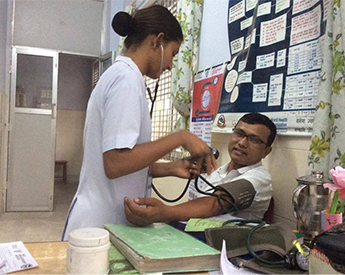

Electrocardiograms (ECG) are the gold standard for clinical evaluation of heart electrical function and aid in the diagnosis of abnormal heart rhythms. This project aims to evaluate the impact of cardiovascular medication on cardiovascular function via ECG parameters. We evaluate ECG records of over 400,000 patients with 19-years of follow-up.

This project examines associations between genetic contributions to cardiovascular and obesity disease risk in Australian rural communities and will identify genetic traits contributing to cardiovascular disease. We have access to biobanks covering rural regions of NSW and VIC.
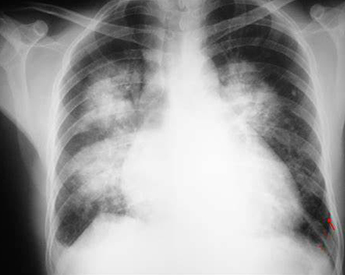
Heart disease is the leading cause of death around the world. In many forms of heart disease, including arrhythmias and cardiomyopathies, inflammation mediated by immune cells play a significant role in disease progression. In this project, we employ specialised bioinformatic algorithms to genetic sequencing data to define immune cell populations.
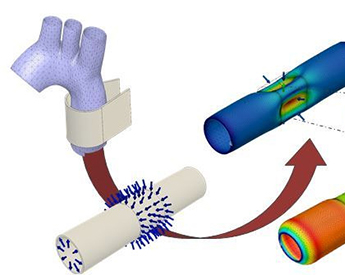
This project employs high level computer simulations to identify medical device targets with a current interest in aortic devices and carotid artery devices to assist cardiac function.



The IMPAACT study supports the early diagnosis and treatment of common health conditions among older Australians by enabling them to provide evidence-informed views on screening in order to facilitate the translation of these perspectives into health policy.



Discover our partners
Our partnerships are national and international with organisations that align with our Be Good Principles. Partnerships are developed at an individual, group, centre and institutional level and align with our university research themes and build our reputation and profile.

Our project aims to explore cardiovascular health solutions in Nepal through a collaboration with the Nepal Development society on blood pressure data for joint publications and supervision of HDR students. We specifically are interested in health systems solutions to improve blood pressure screening and treatment for high blood pressure, and have 2 PhD students aligned to the project.

This project aims to explore health and wellbeing in the community of Ararat with support from the local hospital. Our current PhD student is exploring carotid artery disease in this rural community.
Meet our Centre Members

Associate Professor Belinda Lunnay is an awarding winning public health academic whose work investigates the socio-political systems and structural factors that drive inequities in health protection and wellbeing.

Associate Professor Gesesew, NHMRC Principal Research Fellow, conducts research in Medicine and Public Health, which aims at improving the HIV care and other STIs, conflict and health, commercial and social determinants of health (SDoH), and One Health approach around neglected tropical diseases (NTDs) in Africa and other developing countries.

Dr Kristen Foley’s research explores how social, commercial and political forces shape people’s health.

Dr Mingzi Zhang is an expert in biomedical engineering with dual PhDs in engineering and biomedical sciences.

As a Senior Research Fellow, Dr Nelsensius Klau Fauk mainly applies qualitative methods and equity-focused frameworks to public health.
Dr Pinki Dey is a researcher in Bioinformatics and Computational Biology, specialising in the application of quantitative approaches to unravel complex biological systems.

Dr Ethel Osazuwa is an early career mixed methods researcher focused on wellbeing, youth, gender, and acculturation.

Professor Mwanri is a public health physician by training and has research experiences in public health in general, global health and migrants’ health in particular.

Professor Li has over a decade of training in cardiovascular physiology and biophysics and has focused on understanding the mechanisms
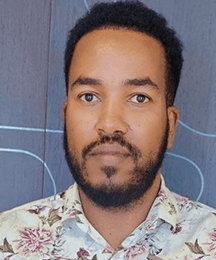
Dr Bereket Duko is a perinatal epidemiologist with a research focus on mental health across the life course.

Professor Catherine Palmer's research focuses on how social and commercial determinants, social structures, and health systems influence people's ability to access, participate in and benefit from sport, leisure and physical activity.
Meet our INSTITUTE Collaborators
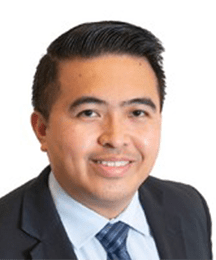
Dr Gavino is a Senior Learning Facilitator in Public Health and Digital Health at Torrens University Australia.
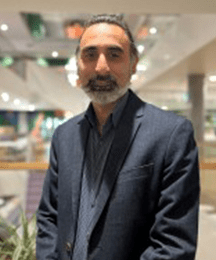
Dr Assareh is a Torrens University Adjunct and Senior Analyst at NSW Health-Agency for Clinical Innovation qualified in Industrial and System Engineering (BEng, MEng), Management (MSc), and Statistics (BSc, PhD).
Research stories
Learn more about some of impactful projects and partners at Torrens University's Centre for Healthy Futures.


