
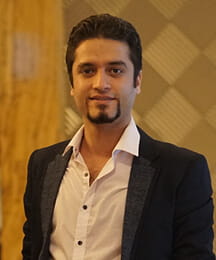
Professor
Ali Mirjalili
AVAILABILITY
Background
Recognised as the number-one AI researcher on Stanford University’s World’s Top Scientists list since 2023, Professor Seyedali Mirjalili is a Research Professor at Torrens University Australia’s Centre for Artificial Intelligence Research and Optimisation (AIRO). He has authored more than 800 publications, amassed 150,000 citations and an H-index of 140, placing him in the world’s top 1% of highly cited researchers. Seyedali created several meta-heuristic optimisation algorithms – such as the Grey Wolf and Whale Optimisers – now widely applied across science and industry. He holds distinguished professorships in Hungary and the Czech Republic, frequently delivers keynote addresses (including a TED Talk) and serves as editor for leading AI journals. A strong advocate for responsible, inclusive AI, he collaborates with government and industry on ethical tools, notably the AMICA service supporting separating couples. Named a top research leader by The Australian for five years, his groundbreaking work continues to shape intelligent systems and address societal challenges.
Qualifications
- PhD in Computer Science, Griffith University
- Master of Computer Science, Universiti Teknologi Malaysia
Areas of Interest/Expertise
- Artificial Intelligence
- Machine Learning
- Ethical implications of AI development
Previous media coverage
New trial of AI‑powered traffic lights will be a test for who gets priority on public roads - The Conversation
Your AI habit is wasting precious resources. Here’s how to use it responsibly - The Conversation
What is AI poisoning? A computer scientist explains - The Conversation
Does AI pose an existential risk? We asked 5 experts - The Conversation
Meta just launched the largest ‘open’ AI model in history. Here’s why it matters - The Conversation
If AI image generators are so smart, why do they struggle to write and count? - The Conversation
Will AI ever reach human‑level intelligence? We asked five experts - The Conversation
How AI can learn from animal behavior - TEDx
Artificial intelligence experts are calling for a six-month pause - ABC News
Inside Australia’s secretive AI factories - 7NEWS Spotlight
AI can be a force of good according to experts - News.com.au
The environmental footprint of AI - SBS News
-
About
Background
Recognised as the number-one AI researcher on Stanford University’s World’s Top Scientists list since 2023, Professor Seyedali Mirjalili is a Research Professor at Torrens University Australia’s Centre for Artificial Intelligence Research and Optimisation (AIRO). He has authored more than 800 publications, amassed 150,000 citations and an H-index of 140, placing him in the world’s top 1% of highly cited researchers. Seyedali created several meta-heuristic optimisation algorithms – such as the Grey Wolf and Whale Optimisers – now widely applied across science and industry. He holds distinguished professorships in Hungary and the Czech Republic, frequently delivers keynote addresses (including a TED Talk) and serves as editor for leading AI journals. A strong advocate for responsible, inclusive AI, he collaborates with government and industry on ethical tools, notably the AMICA service supporting separating couples. Named a top research leader by The Australian for five years, his groundbreaking work continues to shape intelligent systems and address societal challenges.
Qualifications
- PhD in Computer Science, Griffith University
- Master of Computer Science, Universiti Teknologi Malaysia
-
Expertise
Areas of Interest/Expertise
- Artificial Intelligence
- Machine Learning
- Ethical implications of AI development
-
Media
Previous media coverage
New trial of AI‑powered traffic lights will be a test for who gets priority on public roads - The Conversation
Your AI habit is wasting precious resources. Here’s how to use it responsibly - The Conversation
What is AI poisoning? A computer scientist explains - The Conversation
Does AI pose an existential risk? We asked 5 experts - The Conversation
From climate change to landfill, AI promises to solve Earth’s big environmental problems – but there’s a hitch - The ConvesationMeta just launched the largest ‘open’ AI model in history. Here’s why it matters - The Conversation
If AI image generators are so smart, why do they struggle to write and count? - The Conversation
Will AI ever reach human‑level intelligence? We asked five experts - The Conversation
How AI can learn from animal behavior - TEDx
Artificial intelligence experts are calling for a six-month pause - ABC News
Inside Australia’s secretive AI factories - 7NEWS Spotlight
AI can be a force of good according to experts - News.com.au
The environmental footprint of AI - SBS News