

Centre for Artificial Intelligence Research and Optimisation (AIRO)
About the centre
The AIRO research centre aims to explore AI and smart technologies to support humans and businesses flourish in a secure and sustainable digital future.
The AIRO research centre plans to advance the integration of artificial intelligence, internet of things (IoT) and cloud computing for smart future city applications. With a strong focus on service design and human-centric design, the centre aims to address the challenges associated with smart city technologies, such as smart aged home care, digital twin, urban planning, and automated health services. By fostering collaboration among researchers from diverse disciplines, the centre will strive to enhance sustainability, cybersecurity, and societal impacts of future digital society.
Programs of Research
Artificial intelligence
-
Evolutionary Intelligence and OptimisationAIRO develop advanced optimisation and evolutionary computing methods inspired by natural intelligence and adaptive systems. Research includes swarm intelligence, metaheuristics, explainable optimisation, large-scale search, and intelligent decision systems. This is applied to engineering, healthcare, logistics, infrastructure, and autonomous systems while contributing to new theoretical foundations in optimisation and adaptive AI.
-
Planning and Decision IntelligenceThis program focuses on intelligent planning and AI-driven decision-making in uncertain and dynamic environments. Research includes autonomous agents, multi-agent coordination, reasoning systems, sequential decision models, and human-in-the-loop AI. The goal is to develop adaptive and trustworthy decision systems for organisations, infrastructure, and societal applications.
-
Intelligent Robotics & Adaptive SystemsAIRO investigates embodied intelligence, robotics, and adaptive autonomous systems capable of perception, navigation, learning, and safe interaction. Research includes robotic navigation, motion planning, multi-robot coordination, adaptive control, and optimisation-driven autonomy for industrial, assistive, and smart infrastructure environments.
-
Language-Enabled AI & Agentic SystemsThis program explores natural language processing, large language models (LLMs), and agentic AI systems capable of reasoning, communication, and intelligent coordination. Research focuses on language reasoning, AI agents, memory systems, explainability, evaluation, trustworthy interaction, and human-centred intelligent assistants.
Machine learning
-
Foundational Federated Learning ModelsAIRO develops robust federated learning models for distributed, large-scale intelligent systems. Research focuses on non-IID learning, adversarial robustness, trust-aware collaboration, energy-efficient AI, and decentralised optimisation. The program supports scalable, trustworthy machine learning for smart networks, IoT, and autonomous systems.
-
Edge & Physics-Informed Machine LearningThis program investigates machine learning at the network edge, integrating physics-informed AI, multi-sensor learning, and real-time intelligence under resource constraints. Research spans edge AI, smart sensing, federated inference, and safety-critical machine learning for cyber-physical and distributed systems.
-
Federated Learning for Edge SecurityAIRO investigates secure and resilient machine learning systems for edge and IoT environments. The program focuses on federated anomaly detection, intrusion detection, adaptive cyber defence, and continual learning in adversarial settings. Research supports the development of trustworthy, intelligent cybersecurity systems for distributed infrastructure.
-
Trustworthy Foundation Models & LLMsThis program develops trustworthy machine learning methods for foundation and large language models. Research includes provenance-aware AI, prompt manipulation detection, behavioural drift analysis, AI governance, trust scoring, and secure agentic workflows to support reliable and responsible AI ecosystems.

Discover our live projects

We develop frameworks and guidelines for businesses and organisations to ensure AI-driven systems are designed, implemented, and adopted ethically and responsibly.
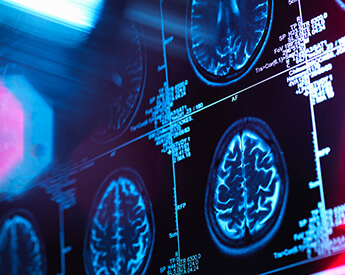
Developing cutting-edge clustering and classification techniques to detect abnormal tissues in x-ray images of breast and brain Magnetic Resonance Imaging (MRI).

We are investigating how machine learning can help predict prefrailty and frailty outcomes, to improve care and provide preventative

Our main objective is to conceptually and technically design disposable robots with biomaterials, and develop algorithms for interaction, coordination, and navigation to distribute autonomous marine robotic systems for performing tasks impossible or expensive with existing technology.

This project leverages cutting-edge AI technologies to facilitate data collection, data processing, and diagnosis of medical conditions across different age groups.
We develop nature-inspired algorithms to mimic natural problem solving in computers and engage in the in-depth analysis to obtain rich insights to ensure high accuracy and improve reliability.
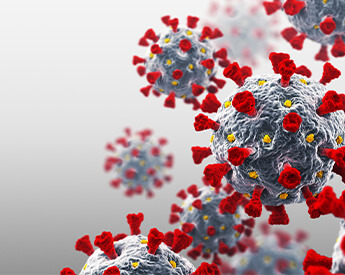
This project develops cutting-edge AI technologies addressing problems that emerged from the COVID-19 pandemic including x-ray COVID-19 detection, cough detection, COVID-19 misinformation detection, dimensionally reduction, and clustering.
Discover our partners
Our partnerships are national and international with organisations that align with our Be Good Principles. Partnerships are developed at an individual, group, centre and institutional level and align with our university research themes and build our reputation and profile.

In partnership with Portable, we develop machine learning and optimisation techniques to help organisations to achieve their goals efficiently and reliably. With several front and back-end researchers and developers, a wide range of business solutions are offered with cutting-edge AI-driven data processing engines and user-friendly interfaces.

AIRO has strong partnership with IIT, a leader in artificial Intelligence and mathematics, for joint research projects, and grant applications, as well as visiting researchers and students.
As a research partner with NUST, a private university based in Omen established in 2018, AIRO works to establish academic AI algorithms and data analytics expertise for NUST’s oil and gas industrial problems.
Centre Collaborators
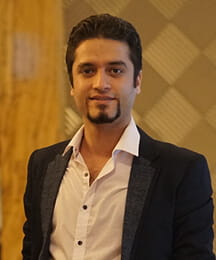
Professor Mirjalili is internationally recognised for his advances in swarm intelligence and optimisation research.
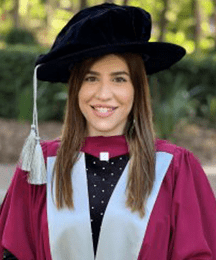
Dr Mirjalili develops evolutionary algorithms to solve real-world engineering design problems, has over 2500 citations and an H-index of 15

Dr Immanuel's expertise includes biomedical signal processing, machine learning and data analytics. Her current research focusses on risk
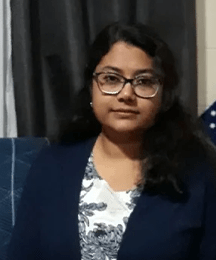
Dr Saha completed her PhD in Computer Science and Engineering and has more than 14 years of experience in academia and industry, including 9
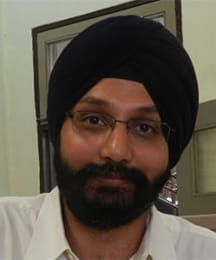
An academic with strong teaching and research expertise in application of informatics tools in Health and Agriculture for nearly two decades.
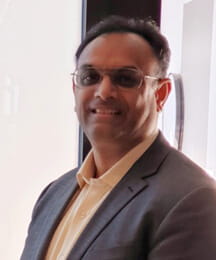
Academic entrepreneur with over 30 years' experience in a variety of industries, corporates, government, NFP, academia - including
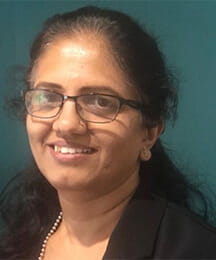
Dr Nandini Sidnal specialises in intelligent software agents, smart agriculture, text analytics, and semantic web.
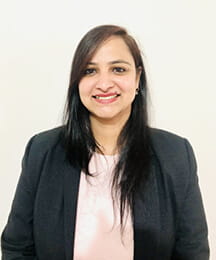
Dr Supriya Supriya specialises in health informatics, brain signal analysis, artificial intelligence, non-invasive health applications, and intelligent data analysis for statistical modelling.
Dr MD (Wahid) Whaiduzzaman specialises in cloud, internet of things, and cyber security computing with a focus on service provisioning.
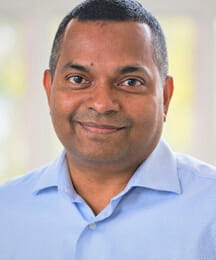
Dr Ganesh R. Naik specialises in biomedical engineering, data science, and signal processing with 150+ papers, 3500+ Scopus citations, and an H-Index of 36.

Dr. Mifrah Ahmad is a senior lecturer, specialising in Game Design and Development at Torrens University.
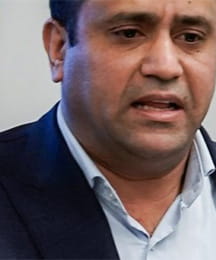
Dr Ammar Alazab is an accomplished Senior Cybersecurity Lecturer with extensive academic and industry experience. He is recognised for his 60+ research publications and over 50 talks in academia, industry, and government.
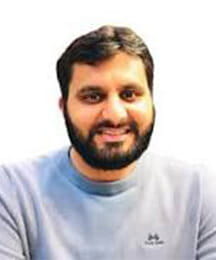
Dr Kamran Shaukat is a new Lecturer at Torrens University Australia, who was named in the top 2% worldwide in Artificial Intelligence Research by Stanford University in 2023.
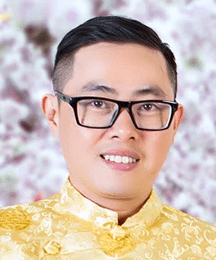
Dr Thien Nguyen specialises in machine/federated learning, internet of things, energy harvesting, wireless networking, and satellite communications.

Dr Mandal specialises in deep convolutional neural networks and optimization for image and video analysis with over 40 publications in prestigious journals and conferences.
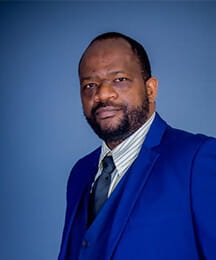
Dr Aaron Bere is a Senior Lecturer at Torrens University. His research is in digital transformation, focuses on the strategic use of digital technologies to improve student performance in educational excellence and innovation.
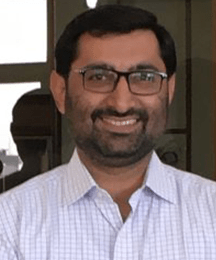
Dr Memon's expertise is in fault detection and identification system, signal processing, condition monitoring systems and AI in education.
Research stories
Learn more about some of impactful projects and partners at Torrens University's Artificial Intelligence Research and Optimisation.

Smart farming technologies powered by IoT, edge AI, and autonomous drones are reshaping Australian agriculture, driving higher productivity, sustainability, and resilience in a rapidly changing world.

AI is moving fast, and it’s natural to question what that means for the future of work. While AI has outperformed humans in specific tasks for years, tools like ChatGPT and Copilot have made its impact feel immediate and personal. So what does the research really say about AI versus human intelligence, and where do humans fit in the future?.

AIRO, led by Professor Tony Jan, is pioneering AI solutions to detect and counter deepfakes with precision. Their research shows how advanced neural networks identify subtle inconsistencies in fake videos, providing a vital defense against digital deception. While deepfake AI is often misused, it also has ethical applications. Read the full blog to see how AIRO is building a safer, more trustworthy digital future.
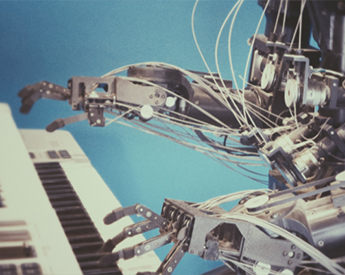
When past generations talk about how different the world looked ‘in their time,’ it’s hard to imagine what life was like for them.
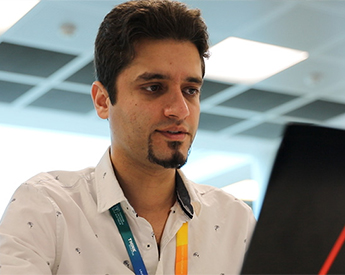
Torrens University Director of the Centre for Artificial Intelligence Research and Optimisation, Associate Professor Seyedali (Ali) Mirjalili, has made the annual global list of Highly Cited Researchers for 2019, which has just been released by the Web of Science Group.
In this episode, our researchers talk about pushing the boundaries of AI further to solve some of our biggest problems, like COVID-19, supply chain efficiencies, and accounting audits.