
Fashion design process: How students brought garments to life at EKKA

Four Billy Blue fashion students take a real client brief from first sketch to the EKKA runway, showing each stage of the fashion design process along the way.
If you're considering a career in fashion, you'll need to learn the fashion design process. Professional designers know how to interrogate a brief, communicate an idea, choose the right materials, solve construction problems and deliver for a client.
Table of Contents
- Research, trends and inspiration
- Sketching and concept development
- Fabric and material selection
- Technical drawings and sampling
- Fittings and quality testing
- From production to the EKKA parade runway
- How a Fashion degree builds skills from day one
Four students from Billy Blue College of Design put that complete fashion design process into action for the EKKA's 150th anniversary celebrations in 2026.
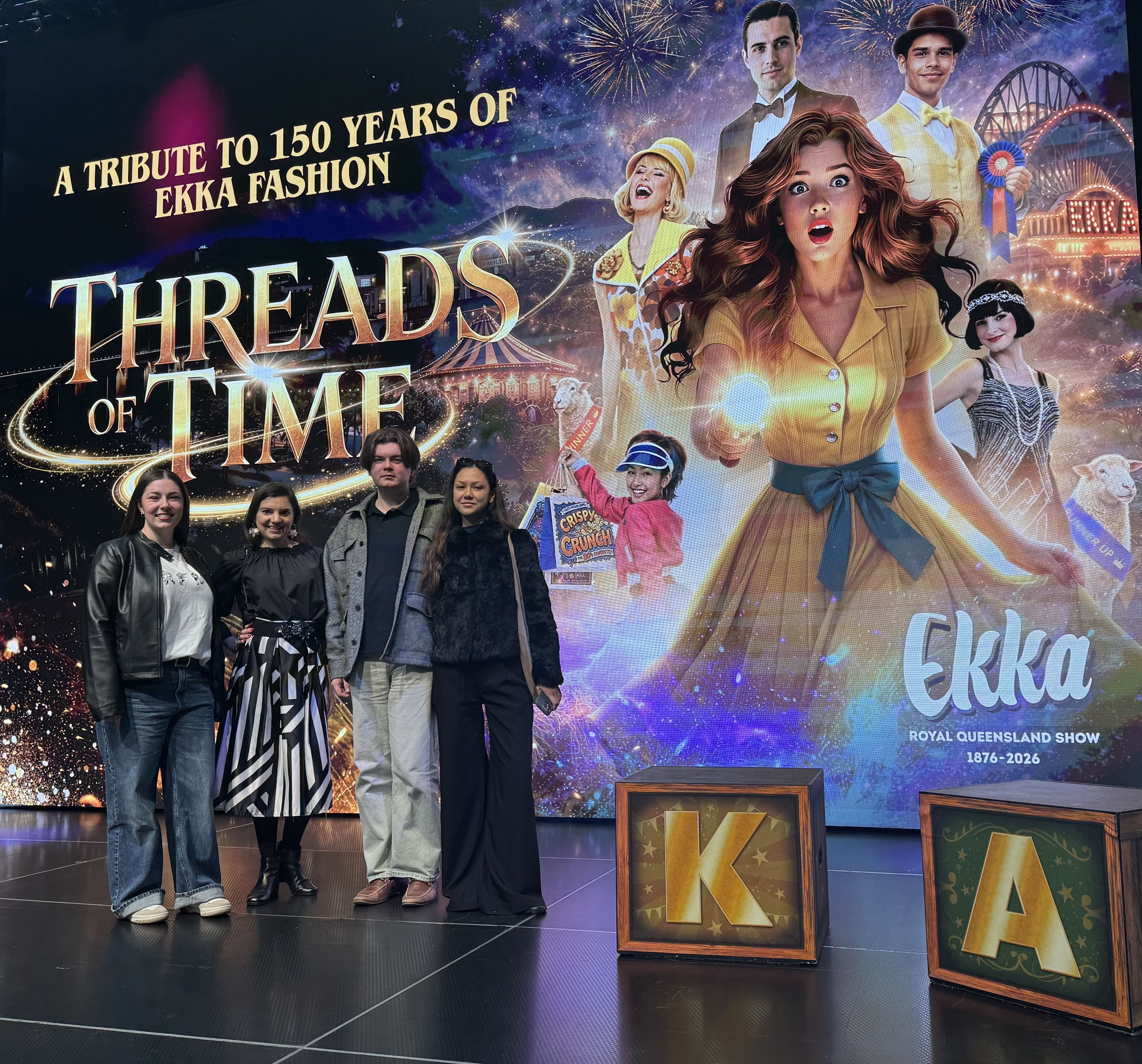
Working on the Threads of Time fashion parade, Clarisse Petteni, Ellie Hobbin, Ethan Postle and Krystal Coleman were given the kind of challenge they will face after university: a genuine client brief, a real deadline and a final outcome that would be seen by thousands of people at the Royal Queensland Show.
This was no hypothetical client or imaginary runway. The garments had to perform for real.
Course at a Glance Fashion Design Process Guide
Research, trends and inspiration
During the research stage of the clothing design process, designers investigate the brief, its cultural and visual context, the intended wearer and the world in which the garment will exist. They collect references, analyse shapes and colours, investigate materials and start identifying the ideas that could drive a collection.
As Senior Learning Facilitator Jaki Walker puts it:
Research is key in helping students translate an industry brief into a realistic design outcome.
For the EKKA project, that meant starting with the theme. Threads of Time was a showcase celebrating approximately 150 years of fashion and, the Billy Blue students were challenged to represent the present day.
Their allocated theme brought together two unmistakable EKKA experiences: rollercoasters and nightly firework shows.
The result was built around hot pink, red, yellow, purple and blue, offset with silver and black. Curved and straight construction lines referenced rollercoaster tracks, while embroidery, beading and surface treatments drew on the energy of fireworks.
Because the garments were being designed for high-energy dancers and performers, function had to be part of the creative idea from day one.
Students explored natural fibres, deadstock fabrics and trims, material longevity and ways to minimise waste in the name of responsible design, a concept embedded through Billy Blue's Bachelor of Branded Fashion Design.
Ellie Hobbin found the collaborative research process pushed the project further.
Working in a group encouraged me to communicate with other designers and consider how my designs fit within the overall collection. As a third-year student, I enjoyed using my skills to assist and teach others, while collaborating to ensure the collection remained cohesive and met the design brief.

Sketching and concept development
Rather than jumping from inspiration board to final garment, designers need to explore multiple possibilities. It's a key part of the design process for fashion designers because committing too early can close down stronger possibilities.
For the EKKA collection, students experimented individually and collaboratively before deciding which designs would move forward. According to Jaki, they worked through experimentation and sketch development before committing to their final concepts.
They also needed to think beyond individual garments.
A collection tells a design story through relationships between colour, proportion, silhouette and fabrication. Every piece can have its own character, but together the garments need to speak the same language.
The biggest challenge when developing a collection as part of a group was reaching a consensus as to what the various garments would look like.
Ethan Postle
Clarisse Petteni came up against the same creative tension.
My biggest challenge when developing a collection was creating designs that felt cohesive while still allowing each designer's individual style to be represented. We had to make collective decisions about colour, fabric, shape and construction so that the garments worked together as one collection.
And, of course, the garments couldn't just look dynamic standing still, they had to be able to move.
My biggest challenge was creating designs that balanced the movement required for the performance while still incorporating my creative vision.
Ellie Hobbin
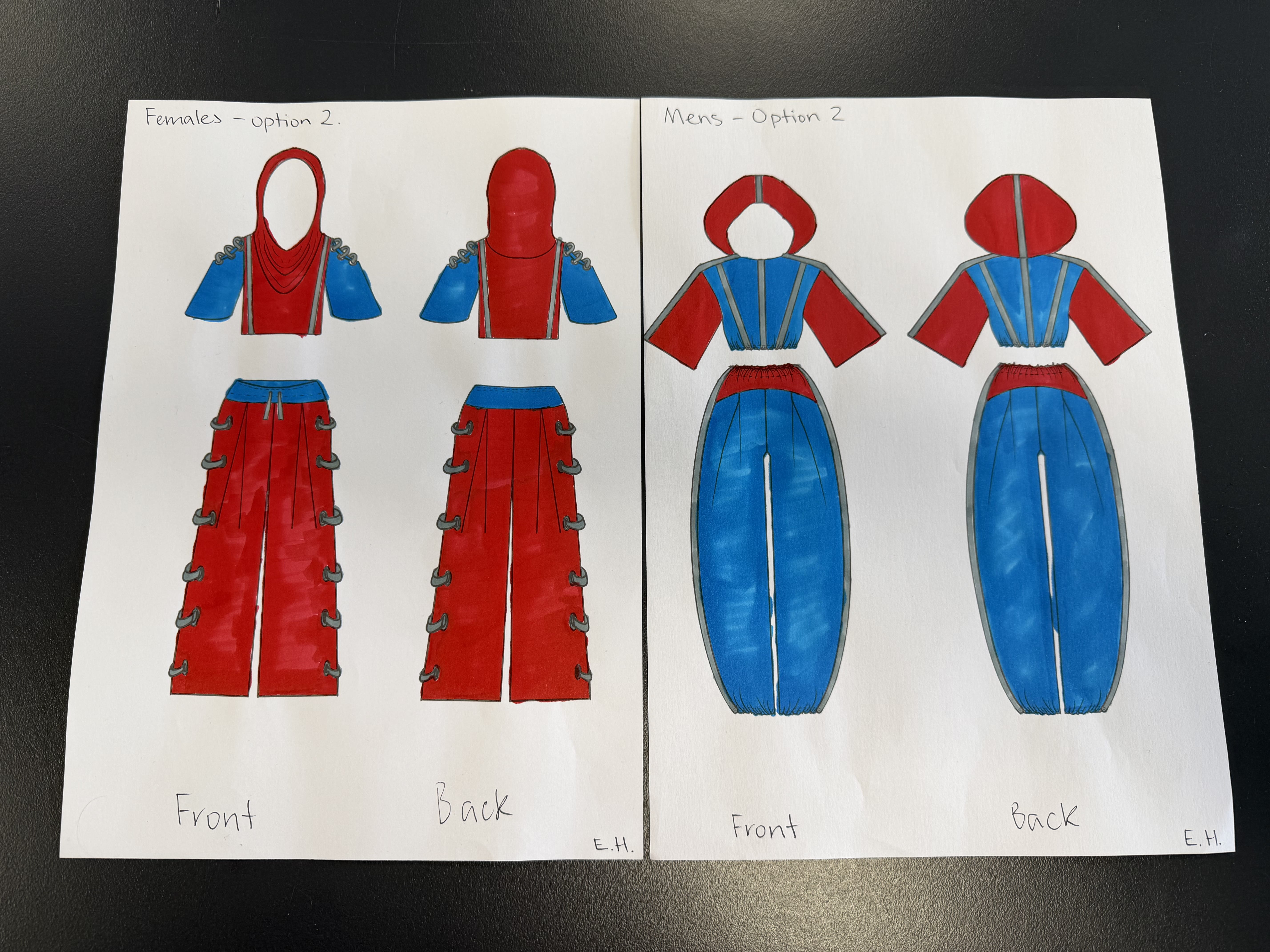
Ellie Hobbin's garment sketches
Fabric and material selection
Fabric selection in the apparel design process involves judging colour or print, as well as considering drape, hand feel, weight, durability, structure, breathability, movement and suitability for the garment's intended use.
For the EKKA students, the intended use was particularly demanding.
The collection had to survive high-energy performance while holding exaggerated shapes and delivering visual impact. Natural fibres formed part of the brief, while deadstock fabrics and trims also allowed students to apply responsible sourcing principles.
For Ethan Postle, the decorative back panels were a great example of how a material choice can bring an unexpected amount of work.
The finished sequined fireworks on the blue vest and the beaded screaming face on the pink puffer jacket took over 70 hours to sew by hand. This was because, with a high energy performance, every single sequin and bead had to be individually knotted.
Seventy-plus hours is a reminder that in fashion, a small detail on paper can become a serious technical undertaking in production.
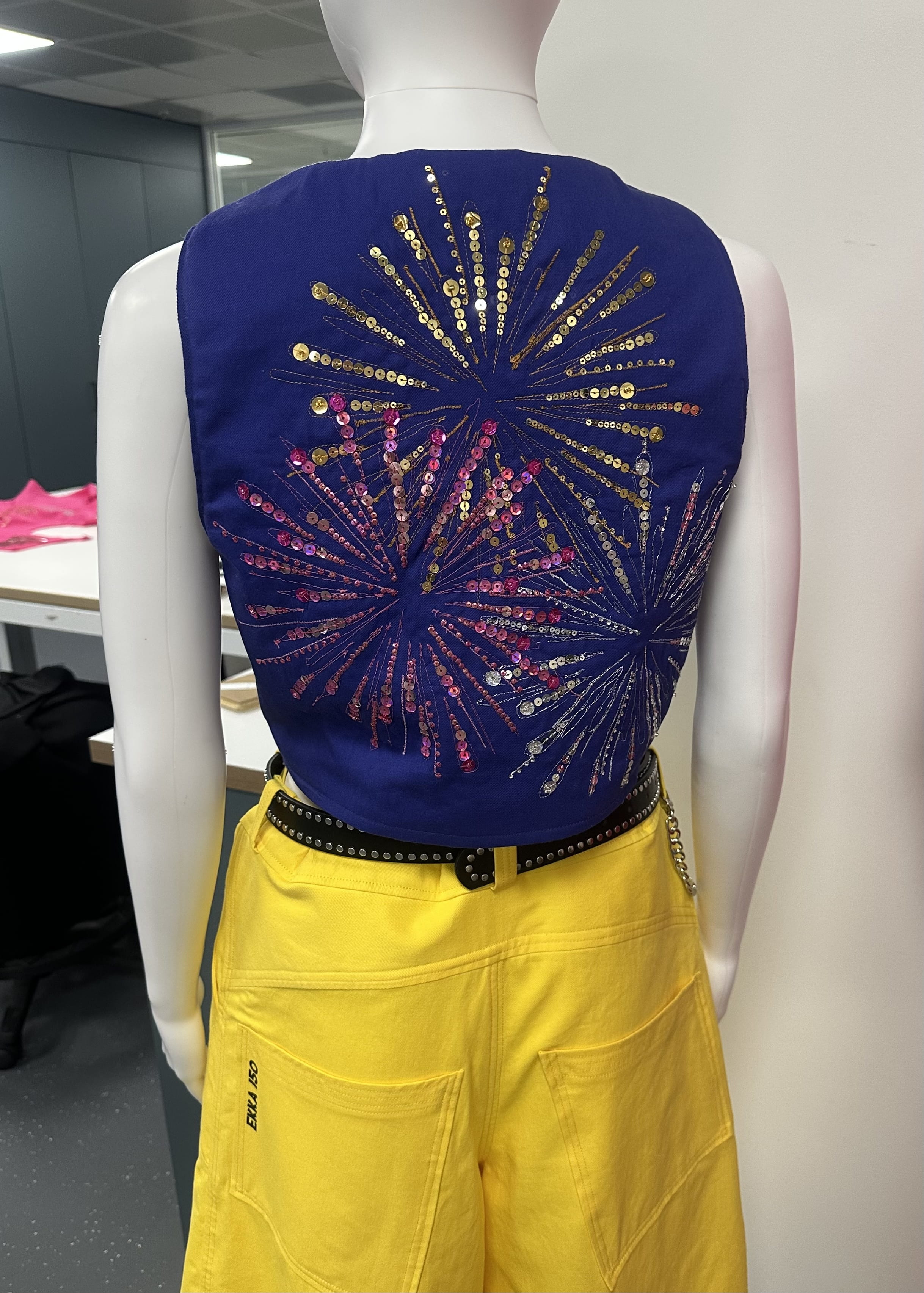
Ethan Postle's back of top detail
Technical drawings and sampling
A technical flat is a precise, two-dimensional representation of a garment showing construction details without the stylised elements of a fashion illustration. It shows the seams, fastenings, panels, pockets, finishes and other details needed to understand how the garment goes together and works.
These drawings often feed into a tech pack, the detailed documentation that goes with a design for sampling and production. Depending on the project, that might include measurements, construction information, fabric and trim specifications, finishes and other technical requirements.
Fashion designers need to communicate with pattern makers, machinists, production teams, suppliers and other collaborators who may never have seen the original inspiration. For the EKKA project, students had to turn their illustrations into drawings that could actually be pattern-made, cut and sewn.
Knowing how to translate creativity into precise technical information is therefore not separate from design. It's part of being employable as a designer.
Fittings and quality testing
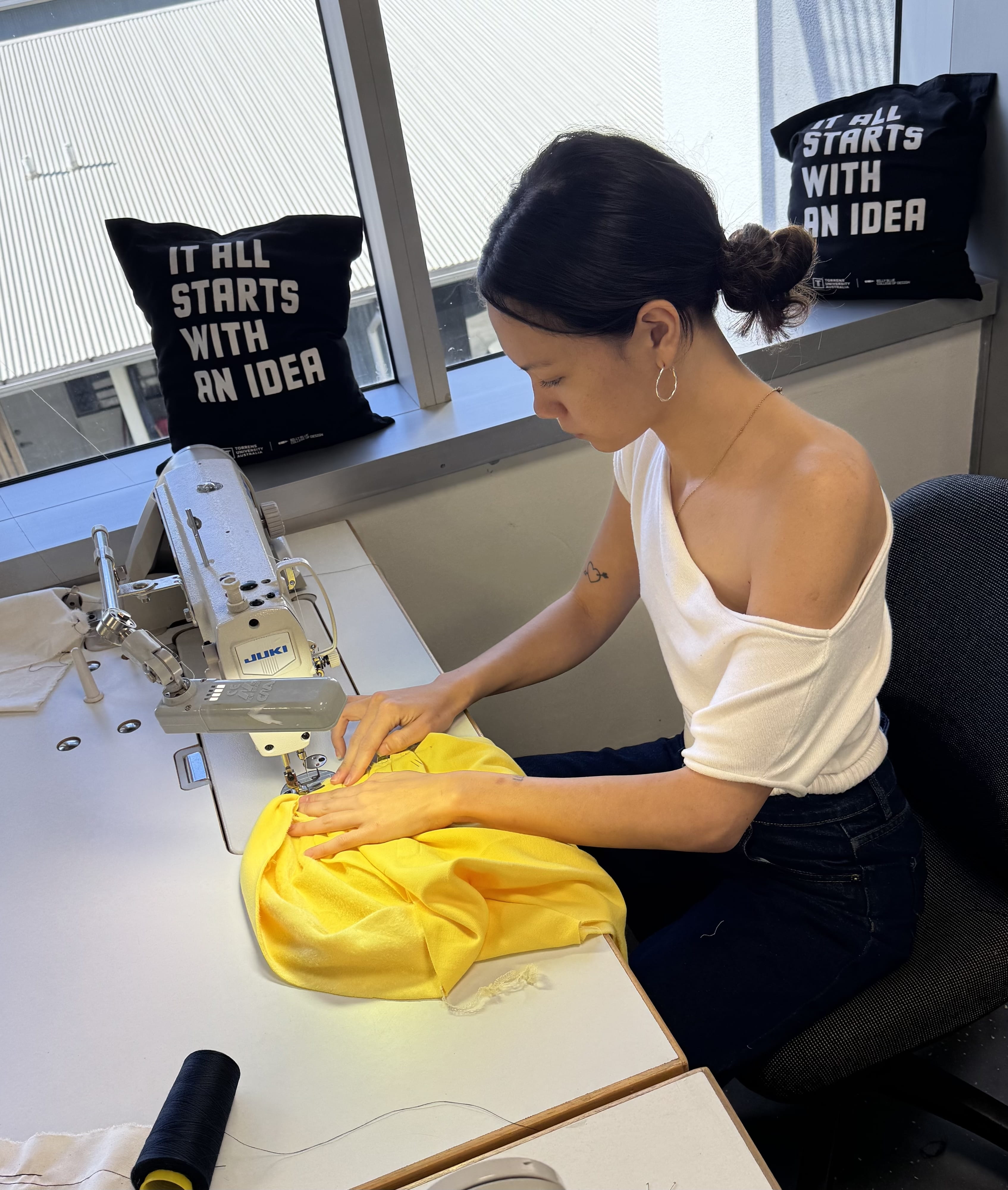
Across fittings and quality testing, designers see what happens when an idea leaves the page and meets an actual body. Proportion, comfort, balance, construction and movement can all behave differently once a garment is worn.
The EKKA students worked through multiple rounds of sampling, fitting and refinement.
Fragile construction simply wasn't an option; the finished garments had to withstand 28 performances across nine days, with dancers moving at high intensity.
Seams needed strength. Fastenings had to hold. Embellishments had to stay attached. Structural elements needed to maintain their shapes while performers moved.
Ellie was struck by how long a design could continue evolving.
I was surprised by how much a design can change right up until the final stages of sewing. These changes... taught me to be flexible throughout the design process.
Clarisse had a similar experience, discovering that even an apparently simple dress and petticoat could require complex construction, precision and many hours of work.
The experience taught me that design is an evolving process requiring problem-solving, patience and flexibility.
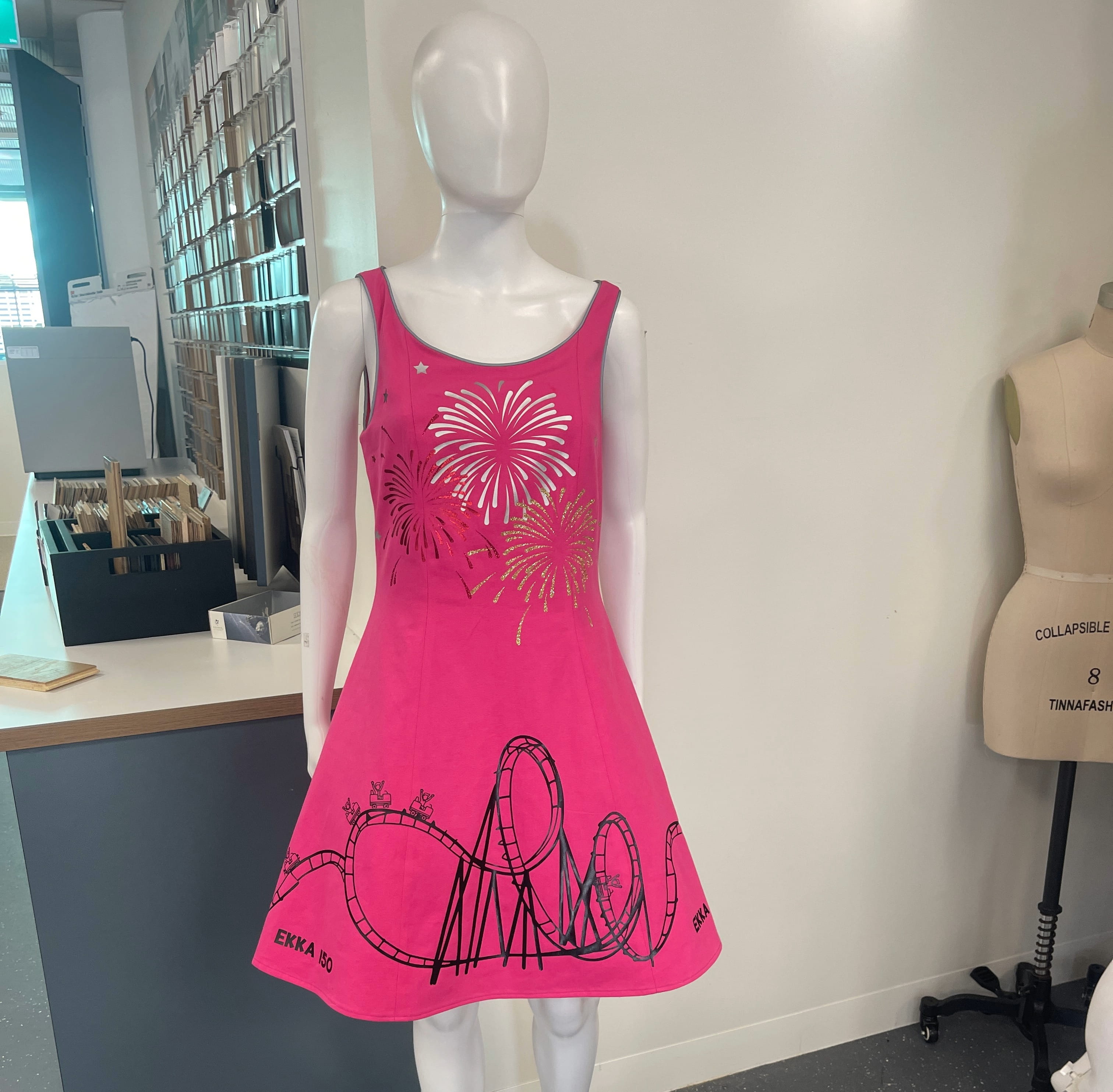
Clarisse Petteni's final outfit
From production to the EKKA parade runway
For the Billy Blue students, all of their work finally left the studio when their garments entered the Royal Queensland Show.
The collection became part of the environment it had been designed for: performers, movement, lights, music and a live EKKA audience.
For Ellie, seeing the result was a breathtaking and surreal feeling.
It made me feel incredibly accomplished and grateful to be part of the project and showed me how rewarding it is to see something I created brought to life through performance.
Seeing how the performers moved made Ethan realise the value of asking even more questions at the beginning of a project, particularly around choreography and performance intensity.
Clarisse, who is also a dancer, saw the experience from both sides.
Seeing my garment perform at EKKA was deeply moving. It reinforced my belief that dancewear should not simply accommodate movement, it should frame, extend and amplify it.
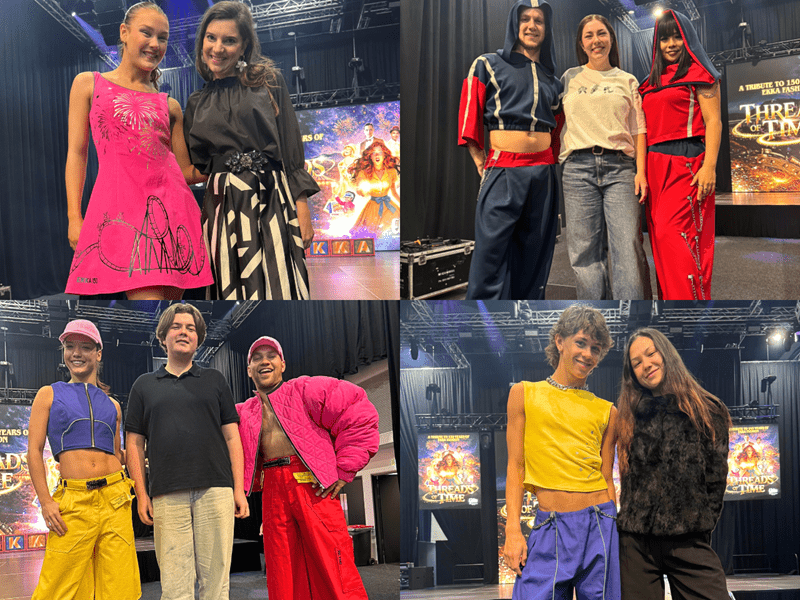
Final rehearsal: Clarisse Petteni, Ellie Hobbin, Ethan Postle and Krystal Coleman
How a Fashion degree builds skills from day one
The EKKA project integrated seamlessly with our students' education, bringing together the skills they had been developing in an industry setting.
The Bachelor of Branded Fashion Design sees students progressively learn to connect creative thinking with technical, practical and commercial decision-making.
Learning fashion design goes beyond making clothes to include learning how to respond to briefs, articulate ideas, collaborate, solve technical problems, make informed material decisions and deliver work for an audience.
Our extensive industry partnerships help put those skills under real pressure.
Through projects and connections with organisations including Fashion Queensland, students tackle authentic briefs and industry expectations while they study.

Related articles


