Turning traffic signal boxes into public art with Artforce

When design meets the street, the city starts talking back.
In Brisbane, an innovative program is transforming everyday infrastructure into iconic art pieces. Through Artforce Brisbane, traffic signal boxes (TSBs), once tagged with graffiti or ignored altogether, are reimagined as vibrant visual landmarks. With Billy Blue College of Design students at the heart of this movement.
These TSBs are being turned into platforms for cultural commentary, creative expression and urban storytelling. This is where public art meets purpose.
What is Artforce?
Artforce is a Brisbane City Council initiative that invites the community to help redefine the cityscape. Since 1999, more than 5,000 volunteers have contributed artwork to traffic signal boxes across the city. The goal? Reduce graffiti, enhance local identity, and foster creative, inclusive communities.
Traditionally, volunteers painted directly onto the boxes. But in high-traffic areas where safety is paramount, digital design wraps are now used, opening the door for graphic designers to get involved in a major way. That’s where Billy Blue students step in.
The role of community and public art
Public art, unlike art housed in galleries, is accessible to all. It lives in open spaces, challenges the status quo and enriches our daily environment. From murals and sculptures to interactive installations and traffic signal boxes, public art humanises our built environment.
Community art, a subset of public art, involves collaboration with local people to reflect their stories, values or history. These works don’t just decorate the city. They reflect it.
While graffiti is often unauthorised and personal, public art is intentional, legal and community-oriented. Both may share a rebellious spirit, but public art invites dialogue rather than disorder.
In Brisbane, programs like Artforce play a critical role in tourism, placemaking and public pride. They make neighbourhoods more liveable and layered with meaning. They give cities a soul.

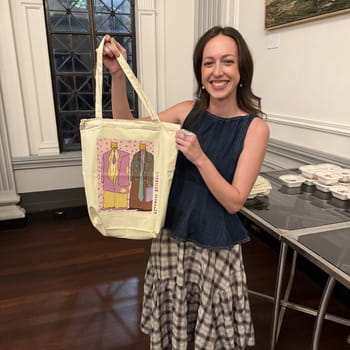
Caszandra Williams – Suits, George & Margaret St
Design students' collaboration with Artforce Brisbane
Billy Blue College of Design partnered with Artforce to take the TSB project to new heights. As part of the DGDVL100 subject (Visual Language of Design), Graphic and Communication Design students developed digital artwork concepts to wrap ten TSBs in Brisbane’s city centre.
This wasn’t just a classroom exercise. Students responded to a real client brief. They had to balance creative ambition with practical design constraints. They had to consider visibility, safety, local context and community impact.
The outcome? Nine student artworks were selected for installation:
- Tom James: Repose, Elizabeth St
- Tamara Easson: Brisbane!, George & Adelaide St
- Kasey Paech: The Game of Life & A Walk Through Time, South Brisbane & Ann St
- Jenna Baglee: Skyline, Eagle St
- Giorgio di Lorenzo: All Eyes on Me, Fortitude Valley
- Caszandra Williams: Suits, George & Margaret St
- Olivia Mynott: Meliora Sequimur, Anzac Square
- Angel Bao: Central Hive, Queen & Creek St

Giorgio di Lorenzo – All Eyes on Me, Fortitude Valley
The research stage
Designing for public space demands insight. Students began their process with research, engaging with communities and observing local landscapes. Some chatted with pedestrians, business owners and residents. Others immersed themselves in the history of their assigned locations.
Their task was to create something beautiful, but also something meaningful. Each design had to speak to the identity of its setting, from Brisbane’s urban grid to its cultural pulse.
Step by step
Creating public art for TSBs involved a structured process:
- Research: Understand local culture, history and community.
- Concept development: Explore visual ideas aligned with Artforce’s values.
- Artwork creation: Use bold colours, strong lines and seamless wrap-around designs.
- Presentation and feedback: Pitch to Artforce and refine based on input.
- Installation: Final designs were professionally applied as vinyl wraps.
The learning process
“Every time I pass the box in the city, I’m reminded why I fell in love with design in the first place.” – Angel Bao
Working with a real client, in a real city, came with real challenges. Students had to navigate feedback, rework designs, and justify their visual choices.

Kasey Paech – A Walk Through Time, Ann St
“Seeing my work move from an assignment to something permanent in the streets of Brisbane has been pretty surreal.” – Kasey Paech
This was more than an assessment. It was a stepping stone into the professional world. Academics Matt Epple, Kate Mork and Hannah Schmith were all involved in supporting the students and working with Artforce on this initiative.
“This project has given students that are largely in the beginning of their study journey hands-on experience with authentic community issues and the opportunity to develop professional problem-solving skills. A fabulous example of creativity responding to a commercial brief.” – Matt Epple
Traffic signal box public art's impact on the community
The feedback was immediate and energising. Locals and tourists alike noticed the new works. Residents reported a renewed pride in their neighbourhoods. Artforce saw a continued reduction in graffiti in these areas, and a spike in positive engagement.
For students, the impact was personal and public. Their work became part of the city’s visual DNA.
From a distance, these traffic signal boxes guide traffic. Up close, they spark conversation.
2025 Artforce Awards
The 2025 Artforce Awards were held on Monday 30 March 2026 at Brisbane City Hall, celebrating outstanding creative talent across the community.
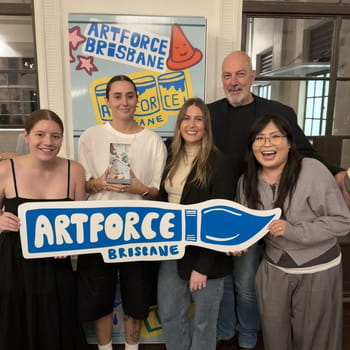
Several of our students attended the ceremony, joined by lecturers Matt Epple and Hannah Schmith, who were there to support and celebrate their achievements. The awards were presented by Lord Mayor Adrian Schrinner, marking a special moment for all involved.

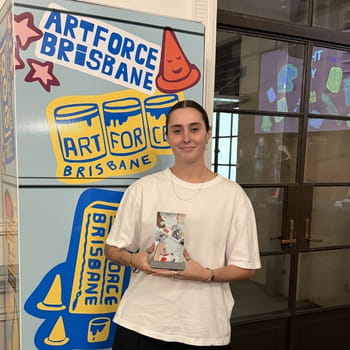
Among the highlights, Kasey Paech was awarded ‘Best Wrap’ for her signal box design "The Game of Life". The event also showcased the work of student Caszandra Williams, whose design was featured on the official tote bags, further recognising the strength of emerging creative talent.

Related articles