
What is human-centred design and why is it important

Good design takes more than choosing the right colours and shapes. Human-centred designs make things work for the people who actually use them.
Human-centred design functions as a professional methodology and a values-based framework for the global design community. This approach guides creators toward solutions that account for the complexities of the world around us.
Table of Contents
- What is human-centred design?
- The importance of human-centred design
- Human-centred design in practice
- Human-centred design at Vogue Codes Summit
At its core, the discipline prioritises a commitment to empathy and the authenticity of the human experience. Designers account for understanding specific human habits and emotional well-being at the very beginning of a project. This rigorous pursuit of understanding aims to genuinely enhance the lives of both individuals and wider communities.
By anchoring their work in these realities, practitioners bypass the pitfalls of hollow innovation to deliver a more sustainable impact.
What is human-centred design?
Human-centred design (HCD) is a problem-solving framework for addressing and anticipating people’s real needs, not just what they think they need. It is firmly rooted in understanding the human experience to produce all kinds of designs that resonate deeply with the people who use them. The core objective is to keep the person using the design's desires, pain points, and daily preferences at the forefront of every creative decision.
HCD is widely used in the design community as a mindset as much as a method. It requires a designer to step outside their personal assumptions and instead, immerse themselves in the context of the person they are designing for. It’s the practice of mediating technical possibility and human reality.
The origins of human-centred design are frequently traced back to 1958 at Stanford University. Professor John E. Arnold was one of the first to propose that engineering design should be centred on the person using the machine.
This philosophy evolved through the late 20th century as the digital revolution bred greater expectations among consumers. Functionality is no longer enough; usability and desirability are just as critical for consumers gifted with choice. Today, HCD has expanded from its roots in industrial engineering to influence healthcare, social policy, global sustainability efforts and more.
There are four foundational principles (or ‘phases’) in human-centred Design:
- People-centred focus: The principle that designers must focus on the people and their context, rather than the technology or the aesthetic alone. This part of the process often involves participatory design, where the "user" is treated as a co-creator of the solution.
- Solve the root problem: Many design flaws occur because the team solved a symptom rather than the underlying cause. HCD demands a deep dive into "the why" to ensure the intervention is actually necessary.
- Systems thinking: Designers must acknowledge that their solution exists within a complex web of other people, environments, and technologies. Changing one part of a system invariably affects the others.
- Small, iterative interventions: Rather than attempting a massive, high-risk launch, HCD advocates for rapid prototyping. By making small changes, testing them, and refining based on feedback, the design evolves toward excellence.
Design Thinking and Human-Centred Design are often mistaken for being interchangeable terms, when in fact they are very different concepts that work hand-in-hand. Design thinking is a suite of tools and steps (Discover, Define, Develop and Deliver) used to solve complex problems. It is the "how-to" guide for innovation and a toolkit for solving complex structural or business problems. Human-centred design, however, is the overarching philosophy. It is the ethical stance that prioritises human welfare and ensures the final solution honours the lived experience of a real person.
The Design Council UK identifies seven tenets that guide designers in their practice of Human-Centred Design:
- The power of observation: Stepping out of the office to watch how people interact with their world in real-time.
- Asking the naive questions: Challenging the status quo by questioning what seems obvious.
- Identifying the misfits: Looking for where a product or service currently fails users to identify the greatest opportunity for improvement.
- Deep empathy: Moving beyond surface-level data to understand the emotional drivers of behaviour.
- Considering the ecosystem: Understanding the ripple effects of a design choice.
- Rapid prototyping: Validating ideas through physical or digital models as early as possible.
- Inclusion: Ensuring that the design accounts for a diverse range of human abilities and backgrounds.
The importance of human-centred design
Human-centred design is essential in the modern world because it helps mitigate risk and increase the value of innovation. Competitive markets call for products that are technically superior and actually work. Those that are difficult to use will fail.
The benefits of adopting an HCD approach for businesses are vast. Because customers have already vetted the solution in the testing phases, it’s more likely their product will land with their target market once it goes to launch. Businesses can also benefit from higher brand loyalty and lower customer support costs because their products are more intuitive and easier for customers to navigate without someone else showing them how, whether through an instruction manual or the assistance of an experienced user.
HCD is a particularly effective methodology for tackling "wicked problems" – a term coined by design theorist Horst Rittel in the mid-1960’s. Wicked problems are issues so large that they are difficult to solve, such as world hunger, war, and poverty. These issues are complex, interdependent, and often social or political in nature, so traditional analytical thinking often fails here because it seeks a single "correct" answer when none is readily available.
HCD, however, accepts that the human experience is messy. It allows designers to deal with ambiguity by focusing on the "North Star" of human needs. Some examples of Human-Centred Design solving real-world problems are Engineers Without Borders Australia’s initiative to improve access to clean water in Cambodia and streamlining emergency room flows at the University of Pennsylvania’s hospital emergency department.
Human-centred design in practice
Designers use a variety of specific tools to bring HDC theories to life:
- Affinity mapping: A technique for sorting large amounts of qualitative data (like interview notes) into related groups to identify patterns.
- User personas: Detailed archetypes of the target audience that help the design team stay focused on real human needs rather than abstract data.
- How might we (HMW) statements: Small prompts used to turn a problem into an opportunity for ideation.
- Customer journey mapping: A visual representation of every touchpoint a person has with a brand, highlighting where they feel frustrated or delighted.
The practical workflow of a project typically moves through three iterative phases:
- Inspiration (discovery): The goal here is to learn. Designers conduct ethnographic research, observing users in their natural habitats. They might use a "Service Safari," where the designer goes through the experience of a customer to find the friction points. This phase is about gathering "thick data"; the deep, qualitative insights that surveys often miss.
- Ideation (synthesis): During ideation, the team takes everything they learned in the inspiration phase and starts to build a framework for a solution. This is the "brainstorming" phase, but it is highly structured. Teams create low-fidelity visual representations of a product (wireframes) to see if the logic of the solution holds up before any high-cost production begins.
- Implementation: The final phase is when the solution comes to life. This is where high-fidelity prototyping happens. In the example of a website or app, the designer creates a model that looks and feels like the final version, using tools like Figma or Adobe XD. They test this with users, observe the interactions, and then go back to the drawing board to fix any issues. This cycle continues until the design is ready for the market.
Progress is prioritised over perfection; the design is never truly "finished," as it can always be improved through subsequent versions.
Human-centred design at Vogue Codes Summit
The importance of Human-Centred Design as a discipline was highlighted by Associate Professor Arianna Vignati, Learning Facilitator at Billy Blue College of Design at Torrens University, at the 2025 Vogue Codes Summit. Speaking to an audience of tech leaders and creatives, Arianna shared how HCD serves as a bridge between the clinical nature of technology and the warmth of human creativity.
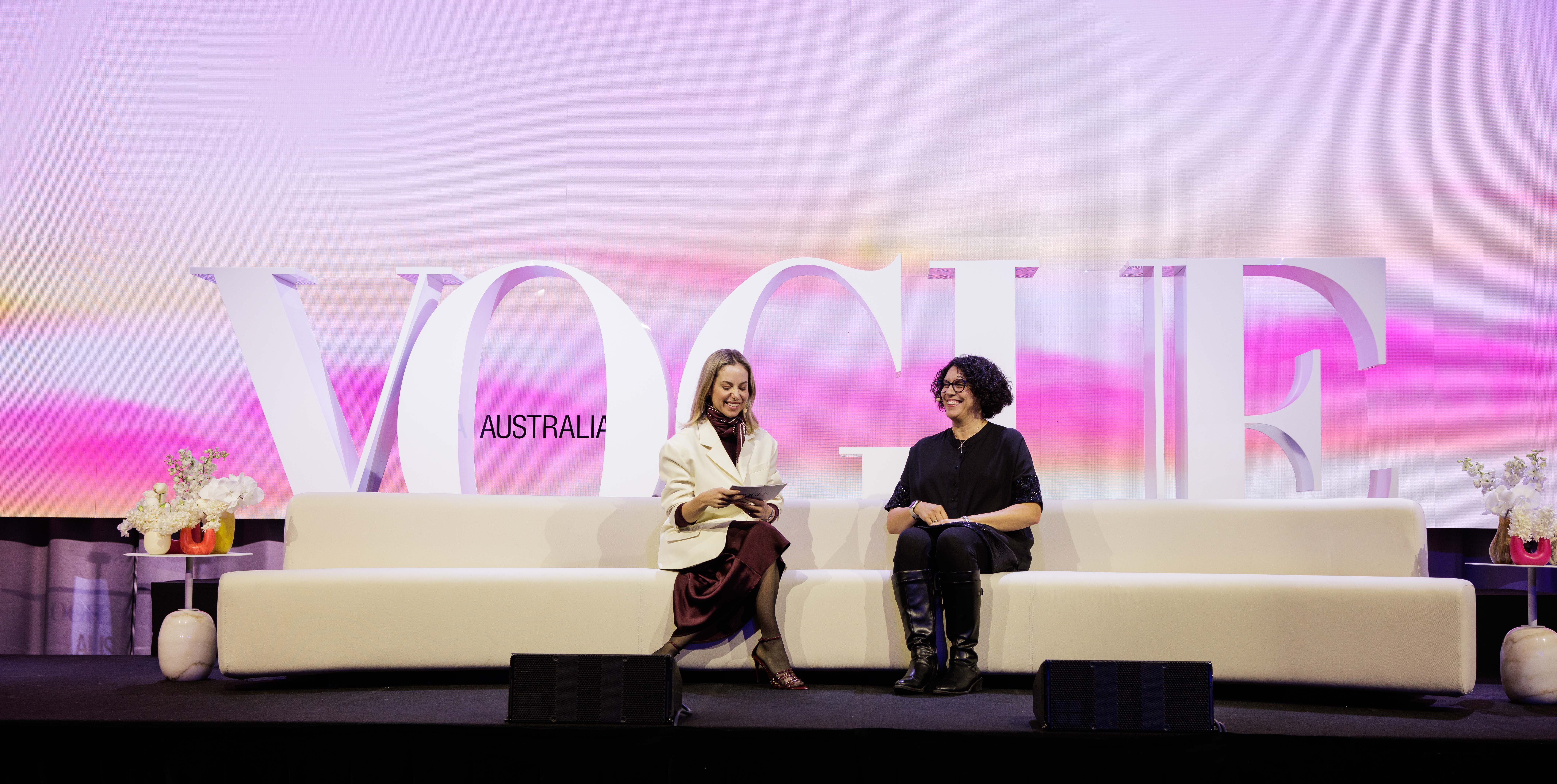
"What's next on human-centred design" panel at Vogue Codes 2025
Arianna’s perspective on human-centred design is shaped by her experiences with three influential mentors: Makio Hasuike, Hisao Hosoe, and Father Luigi Giussani.
- From Hisao Hosoe, she learned that design is fundamentally a quest for meaning. He taught her that every line drawn on a page should serve a purpose beyond mere decoration.
- Makio Hasuike instilled the importance of the "technological challenge," teaching her that a great designer must understand the mechanics and constraints of the production process before they can truly innovate.
- Father Luigi Giussani provided the philosophical foundation, teaching her that "Design is the way we treat things." This principle suggests that how we design an object or a service reflects our respect for the human being who will use it.
A significant portion of Arianna’s talk focused on her work in designing for children, arguing that HCD is often overlooked in this field. Specifically, she explained that children's products are frequently designed with the parent as the "user", focusing on what is convenient for the adult or marketable on the shelf.
She encourages designers to view the child as the "protagonist" of their own experience and to physically and mentally "get on their level”. Achieving that level of understanding requires conducting targeted research activities, such as observing how a child’s motor skills interact with a toy or how their cognitive development affects their understanding of a digital interface. By designing with children rather than just for them, we create environments that foster genuine growth and autonomy for the children who use them.
Furthermore, Arianna posited that the role of the designer is changing. In the past, a designer was often viewed as a solitary creator or an "artist" in a studio. In the modern HCD framework, the designer acts as a facilitator, a mediator, and a leader. Their job is to bring together engineers, business owners, and end-users and guide them toward a shared vision that serves human interests.
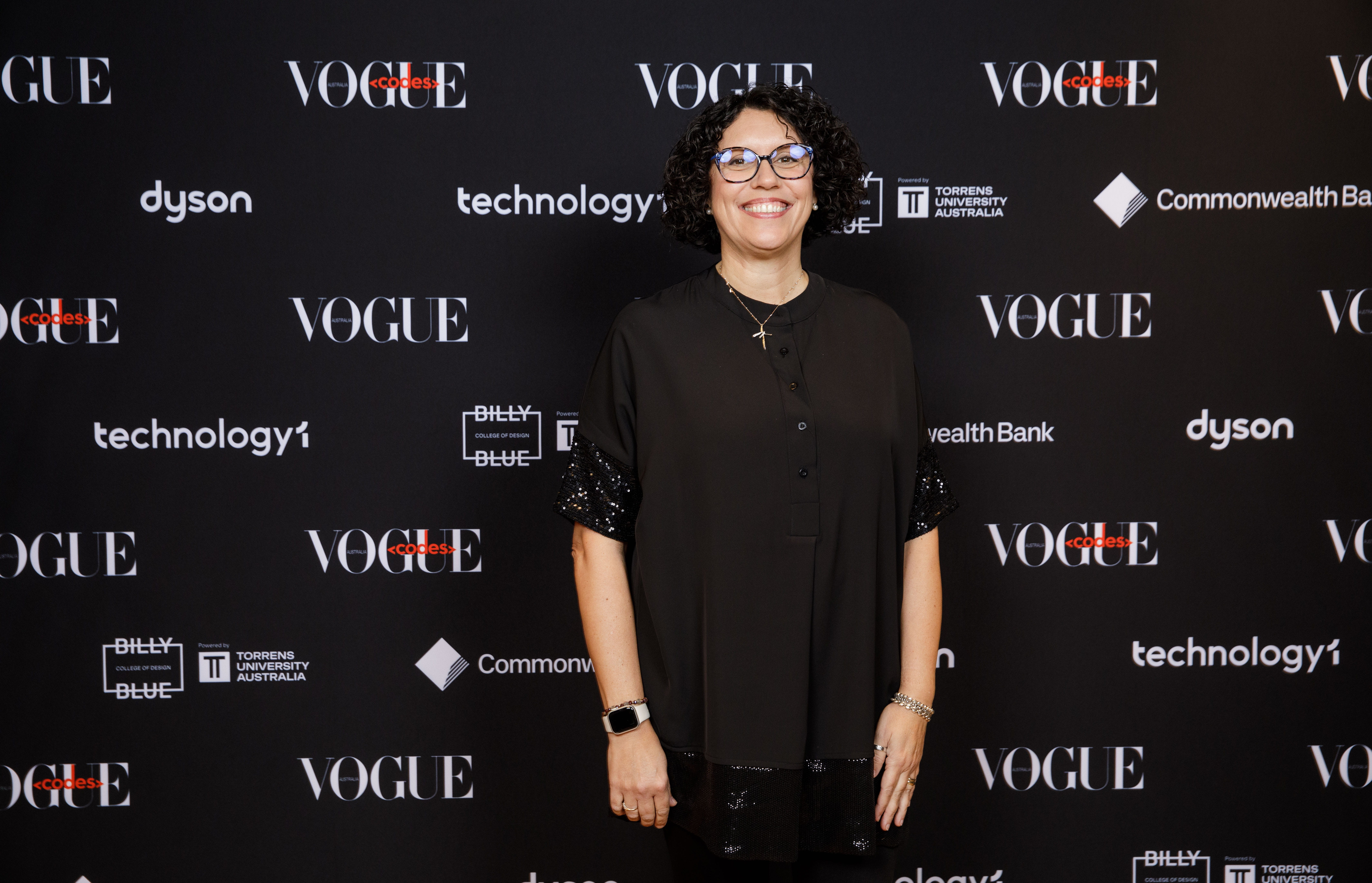
Associate Professor of Design, Arianna Vignati, at Vogue Codes 2025
The summit naturally touched upon the rise of Artificial Intelligence. Arianna was clear in her stance: AI is a powerful tool, but it is not the foundation of design. While AI can process vast amounts of data in seconds and suggest creative directions based on existing patterns, it lacks the capacity for "immersion in reality." An algorithm cannot feel the frustration of a user who can’t find a button on a screen. Heavy reliance on AI in design leads to suboptimal outcomes for users. AI cannot feel empathy by sitting in a room with a person and hearing their story.
She encouraged students and professionals to use AI to handle the complexity, demands, and speed of modern production, but never to let it replace the human depth of the discovery phase. The danger in the design world today is mistaking efficiency for understanding. True HCD ensures that technology serves humanity, rather than forcing humans to adapt to its limitations.
This June 2026, Billy Blue College of Design will once again partner with Vogue Codes as its education partner, aligning with this year's theme, Optimism in motion: Acting now to shape the future.

Related articles


