

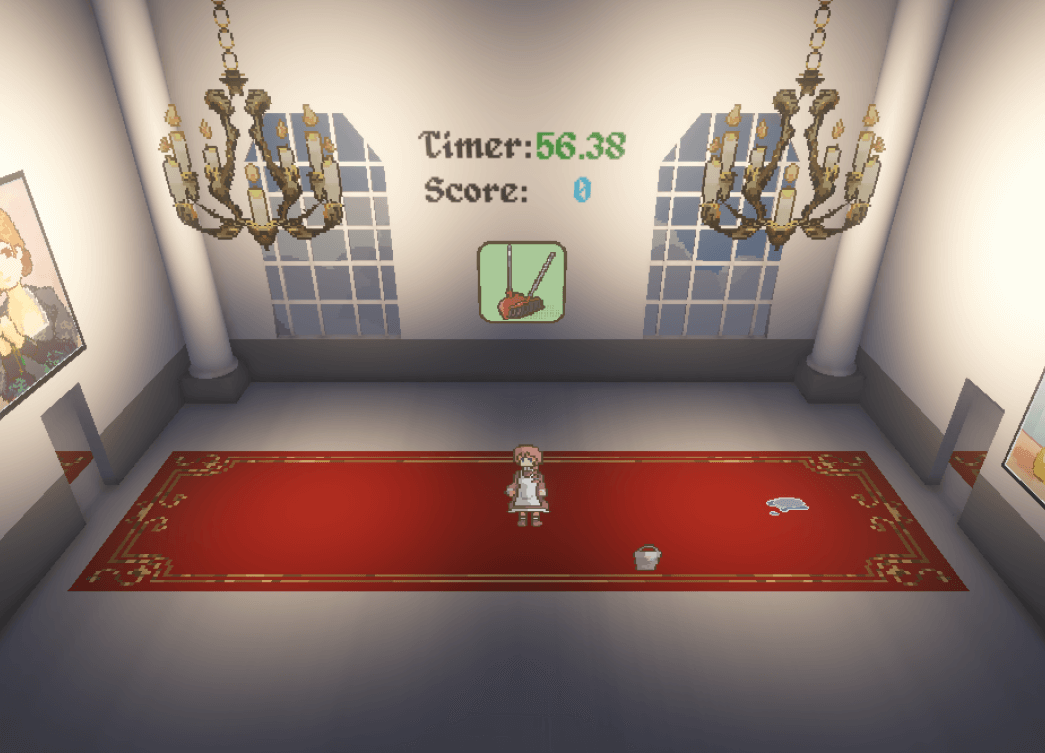
What is an Advanced Diploma of Game Programming?
The Advanced Diploma of Game Programming develops the technical, analytical and problem-solving expertise required to build modern games and interactive experiences. Focused on the games sector across PC, mobile and console platforms, it builds your command of the mathematics, logic and software engineering skills that make gameplay possible.
Learning outcomes
- Demonstrate understanding of game programming fundamentals and ethical conduct in a global, sustainable context.
- Apply contemporary best practice to identify and solve complex game programming problems.
- Apply specialised knowledge in game programming to solve emergent challenges in the context of game development.
- Use industry-standard methods and tools to implement optimal solutions, systems, and behaviours in digital game projects.
- Communicate game programming knowledge, skills, ideas and solutions effectively across diverse audiences and cultural groups.
- Demonstrate teamwork skills by planning and executing project management and communication strategies in interdisciplinary game development projects.

Explore Unreal
Learn advanced 3D skills to succeed in game development, architecture, film, TV, and more with Unreal Engine.

Free Adobe Creative Cloud Pro licence
You'll receive a free Adobe Creative Cloud Pro licence for the entire time you're studying Design with us and for six months post graduation.

PlayStation® First Academic Development Partner
Develop games using the PlayStation® 5 Platform with exclusive access to Professional Development Kits and Tools.
This is an AQF Level 6 course delivered by Torrens University Australia Ltd T/A Billy Blue College of Design.
*For more details on international student study options.
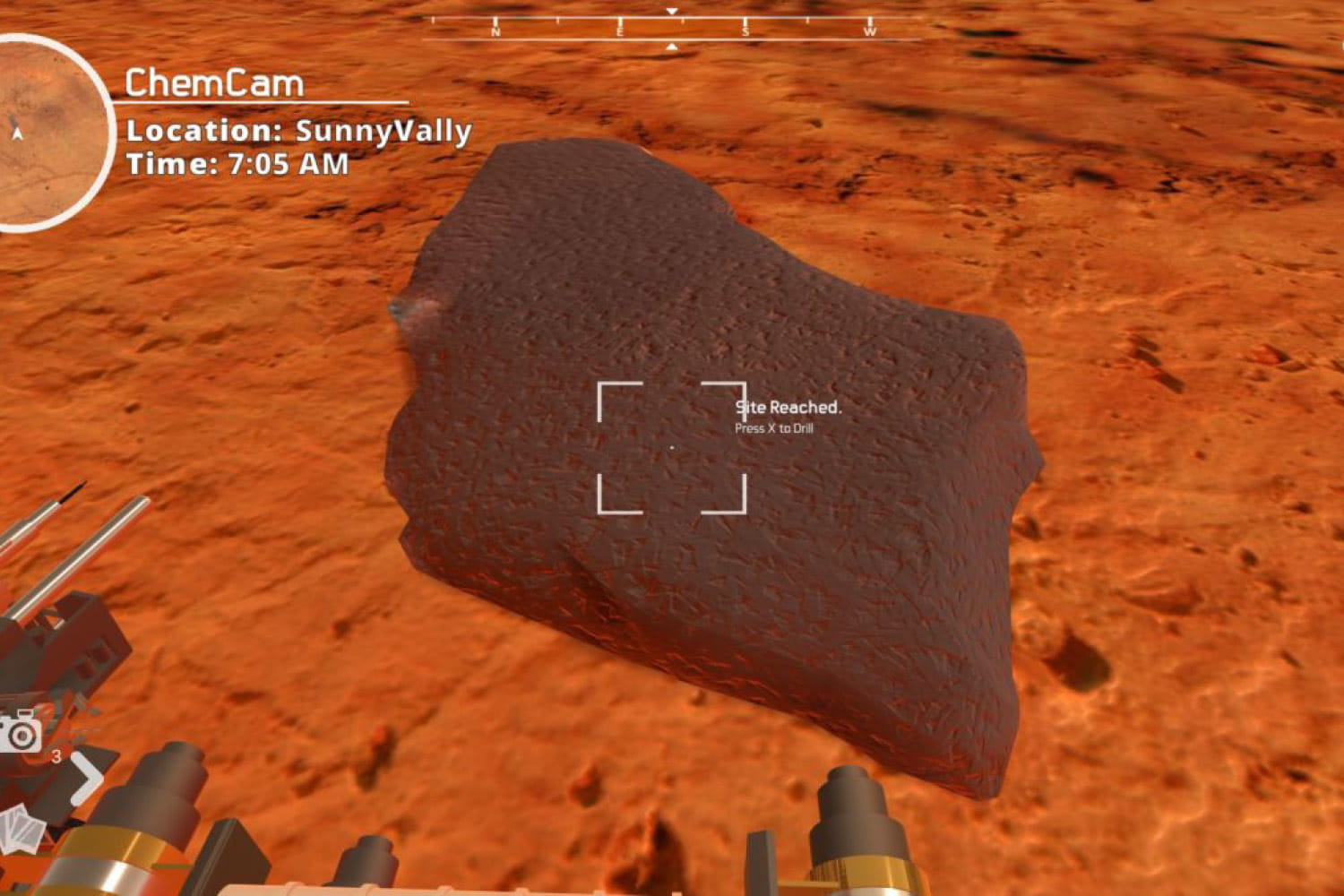

First-time coder friendly

Master industry-standard software

Guaranteed pathway entry
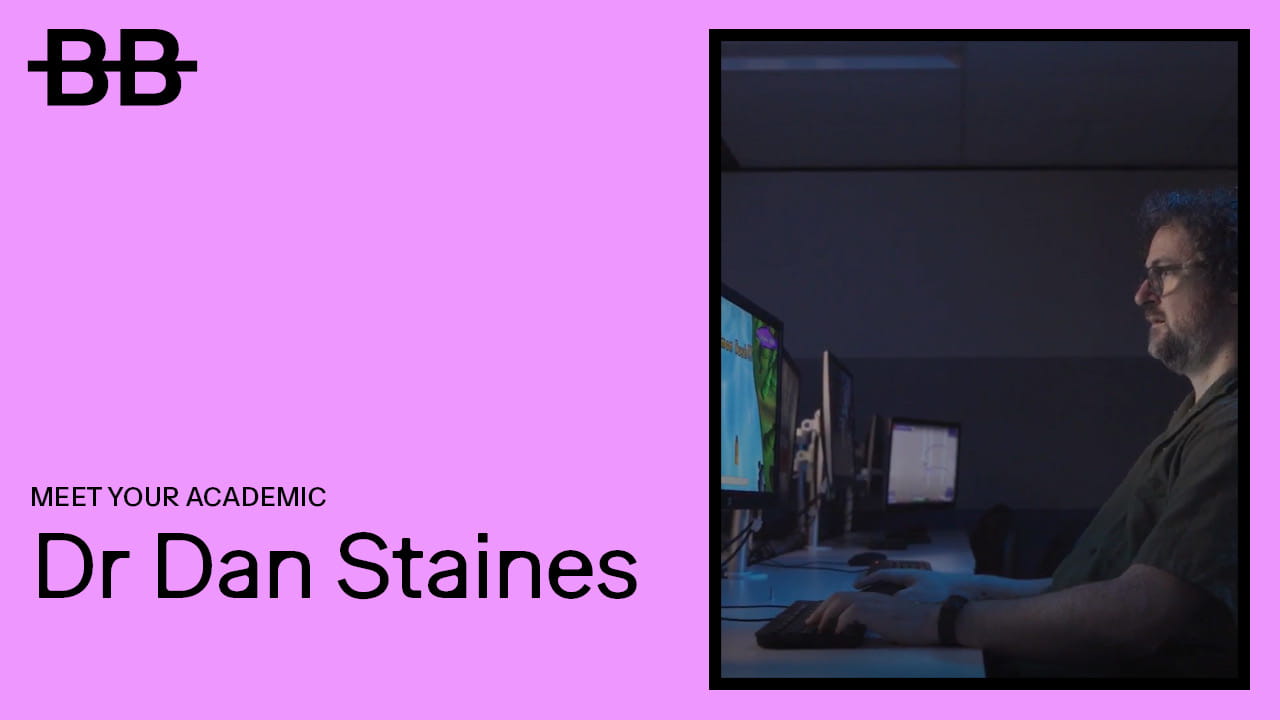
Hear from Senior Learning Facilitator, Dr Dan Staines, on what the world of gaming at Billy Blue is all about.
Career opportunities
Graduate ready to work on real games, with real teams, in real studios. From design and asset creation to production roles, you'll have the ready to break into the industry.
Potential career paths
-
App Developer Average salary$82,500 - $126,000
-
Junior C++ Programmer Average salary$62,500 - $105,001
-
Junior Software Engineer Average salary$85,000 - $103,000

Showcase
Subjects and units
Delivered both on campus and online, the course comprises 11 core subjects and one elective subject, each subject requiring 10 hours of study per week (made up of classes and self-directed study). Assessments may include activity-based assignments or online quizzes. There are no formal exams.
Requirements
Complete 11 core subjects. Additionally, you’re required to select one elective from the electives tab.
Core subjects
-
Game Programming I | GAM101
-
Game Design Principles | GDP102
-
Computer Architecture and Operating Systems | CAO107
-
Introduction to Software Engineering | ISE102
-
Algorithms and Data Structures | ADS103
-
Maths Fundamentals | GAM102
-
Game Production Foundation | GPF104
-
Game Programming II | GAM201
-
Rapid Game Prototype | RGP204
-
Networking and Database Systems | NDS203
-
Introduction to Computer Graphics | ICG202
Requirements
Elective subjects
-
Beyond the Creative Industries | BCI100
-
2D Asset Creation | ACR101
-
Digital Environments and Human Scale | ARC101
-
Interaction Design | DIG103A
-
JavaScript Fundamentals | JSF100
-
Microservices Architecture | MSA106
-
Introduction to Programming | ITP122
-
Data and Networking | MIS102
-
Introduction to Cloud Computing | ICC104
-
Concepts in Artificial Intelligence | CAI104
-
Probabilities and Statistics | PST107
Technology
Learn with industry standard technologies



International students must not enrol in more than one-third (33%) of online subjects over their course, and must study at least one face-to-face subject each study period. For more information, visit Study in Australia.
International students on a student visa are required to study full time (i.e. must complete a minimum of 1.0 EFTSL of study per year). For the latest information on study locations, please check the entry requirements flyer.
Study pathways
Billy Blue offers undergraduate and postgraduate students with flexible entry options and study pathways. Whether you prefer a full program or a modular approach, we can tailor your studies to your needs. Start your journey with an undergraduate diploma or bachelor degree, or grow your career with a postgraduate qualification.
Need more help?
Let us customise a study plan and pathway for you.
Undergraduate
-
Diploma courses ( 2 options )
-
View course
Advanced Diploma of Game Design and Development
CRICOS 118473J
-
Advanced Diploma of Game Programming
CRICOS 118474H
-
-
Bachelor courses ( 2 options )
-
View course
Bachelor of Game Design and Development
CRICOS 095346K
-
View course
Bachelor of Game Programming
CRICOS 119221K
-
Postgraduate
-
Graduate Certificate of Information Technology
CRICOS 107048F
-
Master of Information Technology
CRICOS 107046H
Entry details
Fees
Check the domestic course fee schedule for the cost of your course.
FEE-HELP
Eligible Australian students may choose to defer some, or all, of their tuition fees through FEE-HELP, a loan scheme repaid through the tax system based on income.
Scholarships
If you are truly passionate about Design and Creative Technology, we want to hear from you. We have a variety of Design and Creative Technology scholarships on offer to assist you in becoming a key part of the Design and Creative Technology industry:Admission criteria
Before you begin your course application, check that you meet the requirements listed below.
Australian secondary school certificate, or equivalent
OR
Successful completion of a Vocational qualification (AQF Level 5), or above
OR
Successful completion of at least 0.25 EFTSL at AQF level 6 or above, or equivalent
OR
Work life experience demonstrating the ability to undertake study at the required level which may include approval of prior study or successful completion of a readiness assessment.
Guaranteed pathway and Recognition of Prior Learning
If you have already completed a qualification or gained skills through life or work experience, you may be able to credit this against your degree with us. Check information about Recognition of Prior Learning and Course Credit transfer. We also offer pathway opportunities to further your learning.Fees
Check the international course fee schedule for the cost of your course. Onshore international students requiring a student visa should choose campus-based / blended options.
Fee payment
Course fees can be paid across three study periods. Each instalment to be paid before the beginning of the academic stage census date.
Scholarships
We want you to have the best possible chance to succeed, which is why we offer a range of financial scholarships to support our international students during their study journey.Admission criteria
Before you begin your course application to study as an international student, check that you meet the requirements below.
Successful completion of at least 0.25 EFTSL at AQF level 6, 0.5 EFTSL at AQF level 5 or above, or equivalent
OR
Australian secondary school certificate, or equivalent Senior Secondary qualification, or Baccalaureate Diploma
Guaranteed pathway and Recognition of Prior Learning
If you have already completed a qualification or gained skills through life or work experience, you may be able to credit this against your degree with us. Check information about Recognition of Prior Learning and Course Credit transfer. We also offer pathway opportunities to further your learning.How to apply

Apply
It’s easy! Apply online below or contact us and we can help on 1300 575 803.

Get started
Read through the admissions criteria and ensure you meet the entry requirements.

Offer
We’ll contact you shortly after to confirm your details and help you through the rest of the process.
Frequently asked questions
-
What are Torrens University Australia’s ATAR requirements for domestic students?
-
What if I don’t meet the entry criteria for a degree?
-
Am I eligible for FEE-HELP?
-
Can I get course credit for previous experience?
-
What are Recognition of Prior Learning (RPL) and Credit Transfer (CT)? How do I apply?
-
How do I apply for a scholarship?