
How to create a design portfolio: Step-by-step guide with examples

A strong design portfolio shows how you think, what you care about and how you turn an idea into something worth noticing.
Whether you're applying for your first design role, pitching to freelance clients or preparing for further study, your portfolio is one of the most important ways you can introduce yourself creatively. It gives people something a résumé alone can't: evidence of your skills, your process and your point of view.
A great design portfolio shows what you've made, but it also shows how you think, solve problems and bring ideas to life.
So, how do you create a design portfolio that does all that without cramming in every project you've ever touched? Start with a clear purpose, choose your work carefully and build a story around it.
What is a portfolio? (And why standing out is important)
A design portfolio is a curated collection of projects that demonstrates your creative skills, experience and approach to design.
A résumé is a summary of your education, employment history and capabilities, and a portfolio lets people see those capabilities in action. For a designer, that might mean branding projects, illustrations, digital interfaces, editorial layouts, motion work or packaging. You can include work from jobs, student projects or personal projects.
The emphasis should be on curated.
Your portfolio is a considered selection of work that tells someone what kind of designer you are and what you could bring to their organisation, project or brief, not an archive of everything you've ever done.
Billy Blue College of Design Diploma of Graphic Design alumna Ana Morato discovered that distinction while developing her own portfolio.
I initially tried to place as much work as I could. But ultimately quality over quantity is so important.
After producing several versions, Ana found that her weaker projects actually diluted the strength of the overall portfolio.
The work you choose to include can also change depending on who you're trying to reach.
You may want to tailor your portfolio to demonstrate work in a particular industry, relevant technical skills or ability to respond to challenging briefs.
Whatever the purpose, the goal is similar: make it easy for someone to understand what you can do and why your work deserves their attention.
How to create a portfolio step by step
Wondering how to create your own portfolio from scratch? Before choosing fonts, layouts or website animations, work through a few fundamental decisions.
1. Determine your purpose and audience
First, ask yourself one simple question: who needs to see this? Your answer should influence almost every decision that follows.
If you're applying for junior design roles, for example, review the kinds of skills and projects employers are asking for. If you want freelance branding clients, your portfolio should make your strengths in branding immediately obvious.
Ana built her student portfolio primarily with employment in mind.
"My main goal was to create a portfolio fit for job applications," she says. "I wanted a generalised portfolio that showcased not only my design skills but other skills too, like my illustrations."
She deliberately kept the selection relatively broad so she could remain open to different opportunities.
2. Choose your format
Next, choose the right format. These days, digital portfolios have become the universal standard, but physical books or tactile samples are still used occasionally in fields like print, packaging, or industrial design.
A digital portfolio could take the form of your own website, a portfolio platform or a tailored PDF for particular applications or presentations.
Ana chose to create a website using Readymag. The decision itself became another opportunity to demonstrate design thinking. She used motion and animation selectively while keeping the layout clean enough for the work to remain the focus.
"I wanted my design considerations to show within the website as well, not just in the work within the portfolio," she says.
The digital portfolio itself can be part of the portfolio. If you're a UX designer, an intuitive and accessible portfolio site can reinforce your understanding of user experience. If you're an illustrator, a simpler format may put the emphasis firmly on the imagery.
3. Showcase your strongest and most relevant work
Instead of asking, "What have I made?", ask:
- Does this project show one of my strongest skills?
- Is it relevant to the opportunities I want?
- Does it add something different to the portfolio?
- Can I explain the thinking behind it?
- Am I still proud to discuss it in an interview?
There is no perfect number of projects for every designer. What matters more is that each one earns its place.
Ana noticed that her branding and illustration projects were consistently among her strongest pieces, so those became a focus in her finished portfolio.
One standout was Bodega Valenciana, a project that involved extensive experimentation, sketching, mind maps and iteration.
"I just let myself create," Ana says. "Having the space to be able to create with unashamed passion was really what helped bring the project to life."
That process is valuable because employers and clients are often interested in more than a polished final image. They want to understand how you arrived there.
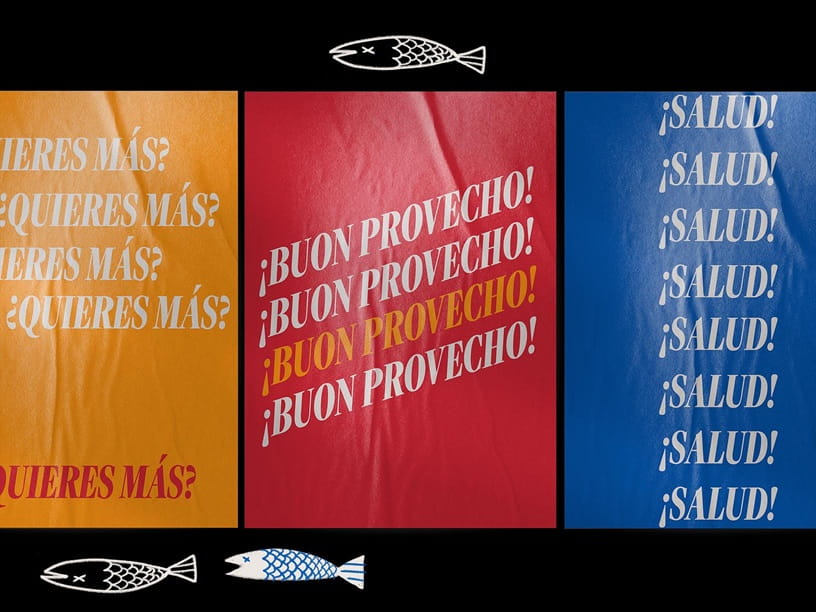
Bodega Valenciana project by Ana Morato
Ana's project, Bodega Valenciana, won Silver in Branding at the 2026 Indigo Design Awards, and was a finalist in three categories at the 2025 AGDA Awards.
4. Turn each project into a story
Creating a design portfolio is partly an exercise in editing and partly an exercise in storytelling.
For each major project, give your audience enough context to understand:
- The brief: What problem or opportunity were you responding to?
- The process: How did you research, ideate, experiment and develop the idea?
- The tools: What techniques, platforms or software did you use?
- The outcome: What did you ultimately create?
- The value: What changed, improved or became possible because of your solution?
An unexplained series of images, no matter how cool they are, won't show your skills and potential.
Ana's Mangia! project provides a useful example. She begins with a short summary, then adds concise explanations throughout the project rather than overwhelming viewers with text.
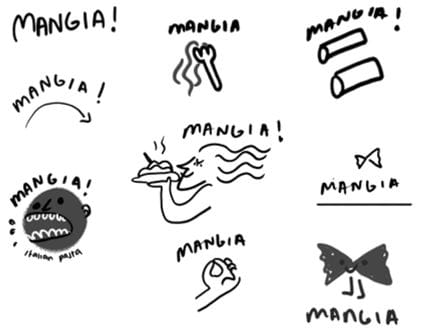

Mangia! project by Ana Morato
"For the images, I tried to be as contextual as possible. Not just showing the packaging/dyeline but creating a real visual system as if the brand was real and out in the world. I gave it a brand voice, chose stock imagery that aligned with the brand to really drive home the overall feel," she says.
"The process reveals itself through a button on the site. I was very big on showing my process. Lots and lots of sketches, mindmaps, digital iterations – there is a LOT on there to see. I also have some copy alongside it to explain my thinking, the roadblocks I came across and how I feel I accomplished my work."
5. Build the essential portfolio pages
What five things should be included in your portfolio? For Ana, the essentials are, "Your work (of course!), a contact page, links to socials and other important links, an about me page, and if you have other personal projects those would be good to have too."
Your About page should just be a concise introduction to your interests, design approach and experience is usually more useful.
Make your contact details easy to find, too. You want potential employers to be able to contact you.
6. Edit, test and keep refining
A portfolio is rarely finished forever.
Proofread your copy. Check links. Test the site on different screen sizes. Ask someone unfamiliar with your work to navigate it and tell you what they understand about you after a few minutes.
Most importantly, get feedback from people whose judgement you trust.
Ana continues to update her portfolio even after moving into the industry.
"I am always going back and iterating," she says. "I also try to get feedback too and implement that into my portfolio."
As your abilities develop, older projects may come out and stronger work may take their place. Your goals may shift too, prompting you to specialise your selection or restructure the way you present certain projects.
Treat your portfolio as a living design project rather than a task you complete once.
Make your design portfolio stand out
Ana's advice for anyone wondering how to make a design portfolio:
"Don't be afraid to trust your design instincts and be unapologetically you."
There's evidence that approach can pay off. Ana says her polished portfolio helped her secure her current role. After the employer saw her work and interviewed her, she was hired on the spot.
If you're ready to develop the skills and industry-ready work that could form the foundations of your own portfolio, check out our Design courses today.

Related articles


